Arizona Gold Drywashing

Arizona Gold Prospecting – Arizona Gold Drywashing

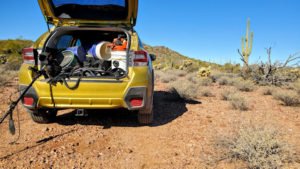
I think this is a good honest gold prospecting video. This goes to show, number one that there’s still gold to be found in the Arizona desert, and number two, it’s a lot of hard work to find that gold.

I’ve said this many times before and some of my videos, and that is if you’re in this for the money, I think you’d be  off working at a fast-food place then prospecting for Arizona gold. (more…)

Arizona Gold Prospecting

Arizona Gold Prospecting

Plenty of gold still out in Arizona.

The perfect combination went out gold prospecting – –  a good dry washer and metal detector.  Yes, they really go together to help find the small gold that’s typical in a lot of the  Arizona gold prospecting areas. (more…)

California Mother Lode Prospectors

California Mother Lode Prospectors

Exploration of gold in the hills of northern California.

From Wikipedia, the free encyclopedia:

In the United States, Mother Lode is most famously the name given to a long alignment of hard-rock gold deposits stretching northwest-southeast in the Sierra Nevada of California. It was discovered in the early 1850s, during the California gold rush. The California Mother Lode is a zone from 1.5 to 6 kilometres (0.93 to 3.73 mi) wide and 190 kilometres (120 mi) long, between Georgetown on the north and Mormon Bar on the south. (more…)

Arizona Gold Metal Detecting

Arizona Gold Metal Detecting

Bumble Bee/Cleator Arizona area with Gold Monster and finding small Gold Nuggets!

From Wikipedia, the free encyclopedia:

Established in 1863, Bumble Bee served as a stagecoach stop and an outpost for the U.S. Cavalry, with a post office established in 1879. The creek, and by extension the town, were so named because early travelers in the area claimed that the indigenous people there were as “thick as bumblebees”. (more…)

Gold in Quartz

Gold in Quartz

This is a December gold prospecting trip around Yuma Arizona.

We were searching through some tailing piles from an old mine where the miners were following gold in a quartz vein.. We were doing dry washing and some metal detecting and met up with Daniel who is looking for iron stained courts in the tailing piles to crush and hopefully extract gold from the quartz rocks. (more…)

Learn Gold Panning

Learn Gold Panning

This instructional video features Freddy Dodge, a mining expert and one of the stars of the hit TV series “Gold Rush.” Freddy, his brother Derek Dodge, and their family have been prospecting, panning, and building mining equipment for decades.

Freddy offers the fundamentals on: collecting and classifying material for panning; how to work the lighter materials from the pan without losing any gold; and even how to properly collect fine gold in your vial. Freddy’s brother Derek and his daughter Nikki offer additional demonstrations and tips on how you can become a better gold panner right away.  (more…)

Australian Gold Prospecting

Australian Gold Prospecting

This is in Pinyalling which is NW of Paynes Find in WA. Found a patch that we got 1.5 ounces off and it was lucky if it was 8m long x 5m wide. We found some stray bits upstream and downstream of the patch but little else other than what was in this little spot. The first 9 grams came in the first 2 hours after we arrived.


From Wikipedia, the free encyclopedia:

The first gold rush in Australia began in May 1851 after prospector Edward Hargraves claimed to have discovered payable gold near Orange, at a site he called Ophir. Hargraves had been to the Californian goldfields and had learned new gold prospecting techniques such as panning and cradling. (more…)

Yuma Gold Mine

Yuma Gold Mine This old abandoned gold mine was just outside of Yuma Arizona not far from the Colorado River.  It’s obvious that the old-timers were following a quartz vein that was carrying the gold. Dry washing the mine tailings show that this was a very rich mine. Even dry Read more

Arizona Gold

Arizona gold weekend Gold prospecting

Looking for Arizona gold near the Little San Domingo Wash near Morristown, AZ., approximately 50 miles northwest of Phoenix, at the junction of State Route 74 and U.S. Route 60.

We did this outing in early July, when the forecast was for 112° in Phoenix! So, what we did is we met up real early, and got out to the claim somewhere around 6:45 AM. We plan to stay, only until about 9:30 AM before the heat got too intense. (more…)

Lost Dutchman Gold Mine

Lost Dutchman Gold Mine Discovered

*Actually they seem to have “Discovered” the legend, but not the mine.

The Lost Dutchman Gold Mine is the most famous lost mine in American history. It was supposedly discovered and kept secret by a German immigrant named Jacob Waltz in the 19th century.

There is very documented evidence the Dutchman existed, was a hired miner and had a large amount of gold in the mountains but the real question is was it a mine he located or had he been stealing the gold from the mines he was hired to work. Either way there still appears to be a large amount of gold in the mountains that he was bringing down but is it just what’s left of his stolen stash or a very rich mine. Finding the ore location is the key as it can be compared to known samples and confirmed to be similar. (more…)

Large Arizona Gold Nugget

Large Arizona Gold Nugget –

2nd Largest Nugget Ever Found in AZ

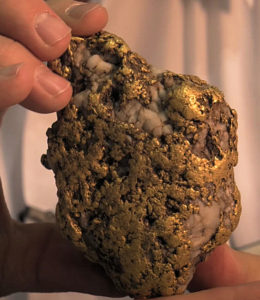
This impressive gold nugget that was discovered in a placer mine in the Huachuca mountains of Arizona.  The nugget appears in its original form, just as it did when it was pulled out of the ground.


The Huachuca Mountains are part of the Sierra Vista Ranger District of the Coronado National Forest in Cochise County in southeastern Arizona, approximately 70 miles south-southeast of Tucson and southwest of the city of Sierra Vista. Wikipedia. (more…)

California Gold Mining History

California Gold Mining History

Very good video of the history of California Gold Mining in Kern county’s Sierra Nevada!

From Wikipedia, the free encyclopedia:

At the beginning of the Gold Rush, there was no law regarding property rights in the goldfields and a system of “staking claims” was developed. Prospectors retrieved the gold from streams and riverbeds using simple techniques, such as panning. Although the mining caused environmental harm, more sophisticated methods of gold recovery were developed and later adopted around the world. New methods of transportation developed as steamships came into regular service. By 1869, railroads were built from California to the eastern United States. At its peak, technological advances reached a point where significant financing was required, increasing the proportion of gold companies to individual miners. Gold worth tens of billions of today’s US dollars was recovered, which led to great wealth for a few, though many who participated in the California Gold Rush earned little more than they had started with. (more…)

Arizona Gold Mine

Arizona Gold Mine

This old abandoned gold mine was just outside of Yuma Arizona not far from the Colorado River. 

It’s obvious that the old-timers were following a quartz vein that was carrying the gold. Dry washing the mine tailings show that this was a very rich mine. Even dry washing in the general area produced some very fine gold dust. From poison gas, unseen drop offs, wild animals and rattlesnakes, I would never advise anyone to go into one of these old abandoned gold mines (more…)

California Gold Prospecting Show

California Gold Prospecting Show

A look back before the Covid-1

– Gold nugget prospecting equipment – prospecting equipment demos, gold mining hand tools, floating dredges, fine gold recovery, gold nuggets, gold nugget detectors, prospecting maps, metal detectors, California gold nuggets & Arizona gold nuggets. (more…)