Arizona Gold History – Old China Dam
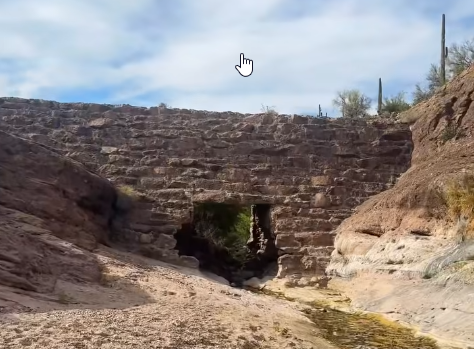
Hidden just north of Lake Pleasant, where the flat desert floor abruptly collides with the rugged foothills of the Bradshaw Mountains, lies one of Arizona’s coolest historical anomalies: The Old China Dam.
Arizona Gold History – Old China Dam
For most off-roaders and hikers heading up Cow Creek Road, it’s a scenic pit stop—a beautifully preserved stone wall cutting through Humbug Creek. But for gold prospectors, it represents something much more intriguing: the remnants of a massive, failed 19th-century gold rush that left plenty of color behind for modern-day panners.
Arizona Gold History Old China Dam
If you are looking for a weekend adventure that combines backcountry exploring with a chance to find some color in your pan, here is everything you need to know about the history, the land, and the gold of China Dam.
🗺️ The Lay of the Land: Is it Public?
One of the biggest hurdles for desert prospectors is navigating the maze of private property, state trust land, and active mining claims. Fortunately, the Old China Dam sits entirely on Bureau of Land Management (BLM) public land (managed by the Hassayampa Field Office).
Once you drive north past the official Lake Pleasant Regional Park boundary, you enter open BLM territory. The staging areas, dispersed camping spots, and the wash itself are free to access. While you don’t need a county park pass or a state trust permit to explore the dam, always remember to respect the desert, pack out your trash, and keep an eye out for active, staked mining claims in the surrounding hills before you drop a shovel.
🏛️ Built by Hand: A 140-Year-Old Engineering Marvel
To understand the gold potential here, you have to look at why this massive structure was built in the first place.
Constructed in the late 1880s (around 1885–1886), the dam was hand-built by a crew of Chinese immigrant laborers. These men were originally hired to work the grueling silver and gold mines deep in the Bradshaws, including the famous Tip Top Mine nearby.
Using local rock, they constructed a dry-stack stone masonry arch dam. They fitted the heavy blocks together so flawlessly by hand that the sheer architectural design held back the water pressure—without a single bag of modern cement. Despite well over a century of violent desert flash floods ripping down Humbug Creek, the main wall of the dam still stands tall today.
💰 The Gold of Humbug Creek: Why the Old-Timers Left It Behind
By the 1890s, the dam was backed by the Humbug Hydraulic Mining Works. The plan was ambitious: use the water trapped by the dam to feed high-pressure water monitors (giant water cannons) to wash down the gold-bearing gravel banks downstream.
The operation was a massive financial failure, but not because there wasn’t gold. The gold in this specific section of the lower wash was too fine.
The Bradshaw Mountains upstream are absolutely loaded with historic gold veins. Centuries of erosion washed that gold down into Humbug Creek, but by the time it reached the lower flats near the dam, it had been ground down into flour gold and micro-flakes. The primitive, high-pressure sluice boxes used by the hydraulic miners couldn’t trap the ultra-light gold; it simply floated right out of their boxes and washed into the tailings.
🧼 How to Pan the Waterway Today
What was a curse for the 1890s mining conglomerates is a blessing for the modern recreational prospector. Every summer monsoon season, massive flash floods tear through Humbug Canyon, re-concentrating fresh material down the creek and trapping it right at the dam.
However, working this area requires some strategy:
Dig Deep: Because the dam has acted as a giant sediment trap for over a century, the area directly behind the wall is filled with feet of fine flood silt and sand. The good, heavy gold isn’t sitting on top. You need to dig down through that top layer of overburden to hit the older, compacted gravels or find exposed bedrock cracks where the heavy gold settles.
Classify Down: Because the gold here is notoriously fine, classification is your best friend. Screen your material down to a fine mesh before you pan it.
Watch the Black Sands: Humbug Creek is packed with heavy black sands (magnetite and hematite). When you get down to the bottom of your pan, take your time. Tap the pan gently to wash the black sand back, and you will likely find those bright, tiny micro-flakes the old-timers washed right over.
🚗 Getting There
Getting to the staging areas along Cow Creek Road is a standard, bumpy dirt ride. However, if you plan to take the side trails down into the creek bed right above the dam, the terrain gets incredibly steep, rocky, and sandy. A high-clearance 4×4, UTV, or a rugged dual-sport bike is highly recommended.
As a bonus, because it’s open BLM land, the area is heavily populated by wild burros—the direct descendants of the old miners’ pack animals. You’ll likely hear them greeting you from the ridges while you work the wash.
Pack your gold pan, bring plenty of water, and go stand on a piece of Arizona gold history!
⚠️ IMPORTANT: Active Mining Claims & Prospecting Etiquette
Before you pack your shovel, know the rules: While the Old China Dam sits on open Bureau of Land Management (BLM) public land, this entire region is highly mineralized and actively prospected. Consequently, the area is heavily blanketed by legal, active mining claims held by private individuals as well as prominent gold prospecting clubs from the greater Phoenix area.
You cannot legally prospect, pan, or sample on an active claim without explicit permission from the claim owner.
To stay on the right side of the law and avoid any confrontation or legal trouble:
Verify the Boundaries First: Always check current claim maps via the BLM’s MLRS (Mineral & Land Records System) or use mapping tools like MyLandMatters before you head out.
Look for Markers: Keep your eyes peeled for physical claim markers—typically PVC pipes or wooden posts with claim papers attached—on the ridges and banks surrounding the wash.
When in Doubt, Don’t Dig: If you cannot verify whether a specific bend in Humbug Creek is claimed, keep walking. There is plenty of open, unclaimed BLM ground to explore if you do your homework first!
Arizona Gold History Old China Dam
#######
Visit our gold prospecting site to view of collection of natural gold nuggets,
silver and many other unique precious metals collectibles and great gift ideas:
https://california-gold-rush-miner.us
A few examples from our site:
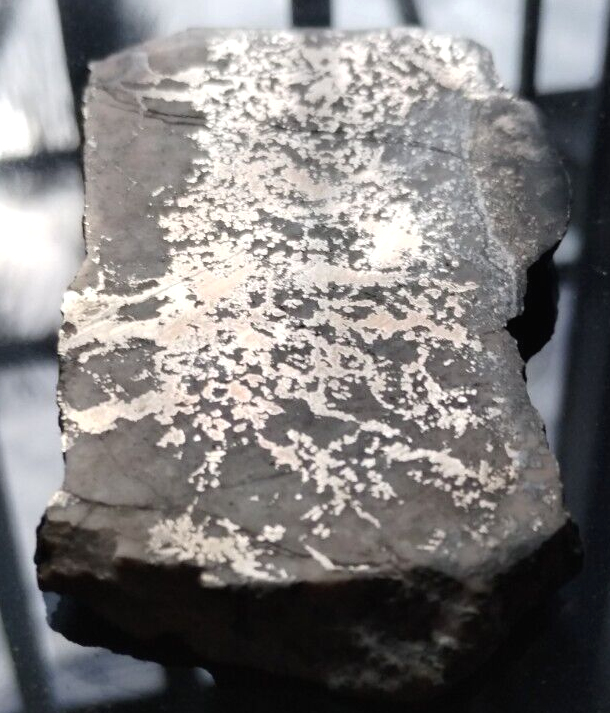
High Grade Silver Ore Slab

silver slab – example only
Nice sawn vein specimen of fresh, unaltered high grade silver ore from the world-class Cobalt Ontario deposits. Sawn on one side only. The deposit was described in Mineralogical Record, Volume 43, Number 6. In general, veins are predominantly composed of carbonates (calcite and/or dolomite) with arsenides and sulpharsenides of Co, Ni and Fe with native Ag and Bismuth. Most of this material has been squirreled away in collections by now, although specimens do occasionally come to market.

There are a few of these silver slabs available. The very bright silver really makes this piece stand out, but, unfortunately makes it all so hard to photograph. As an example the one pictured above is 66 grams.

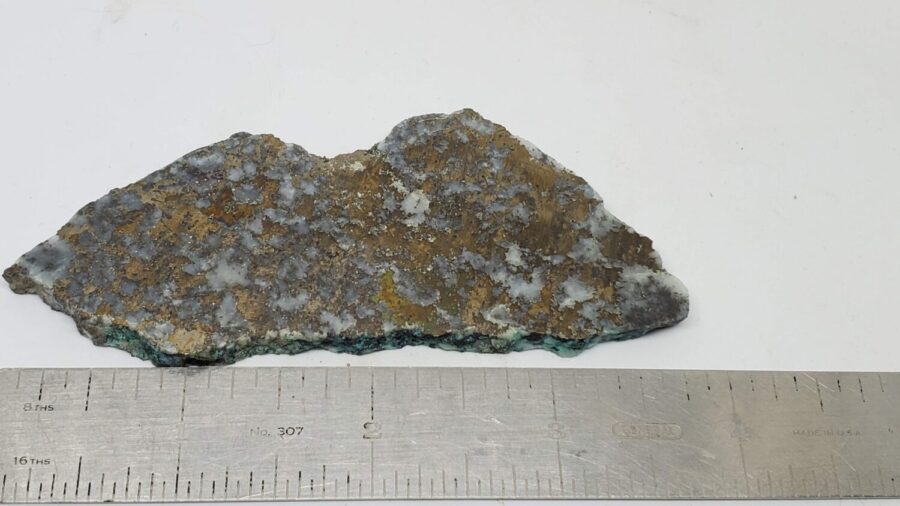
Silver, Bornite
There are a few of these beautiful native silver w bornite specimens available. Here is a 2 inch x 1 inch, Apx. 17.5 grams – Native Silver on Bornite thumbnail specimen from San Martin, Mexico. As an example the one pictured above is 17.5 grams.
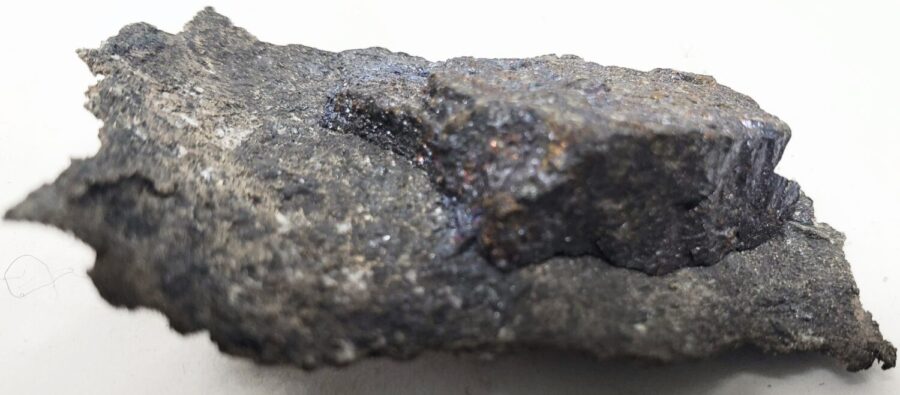
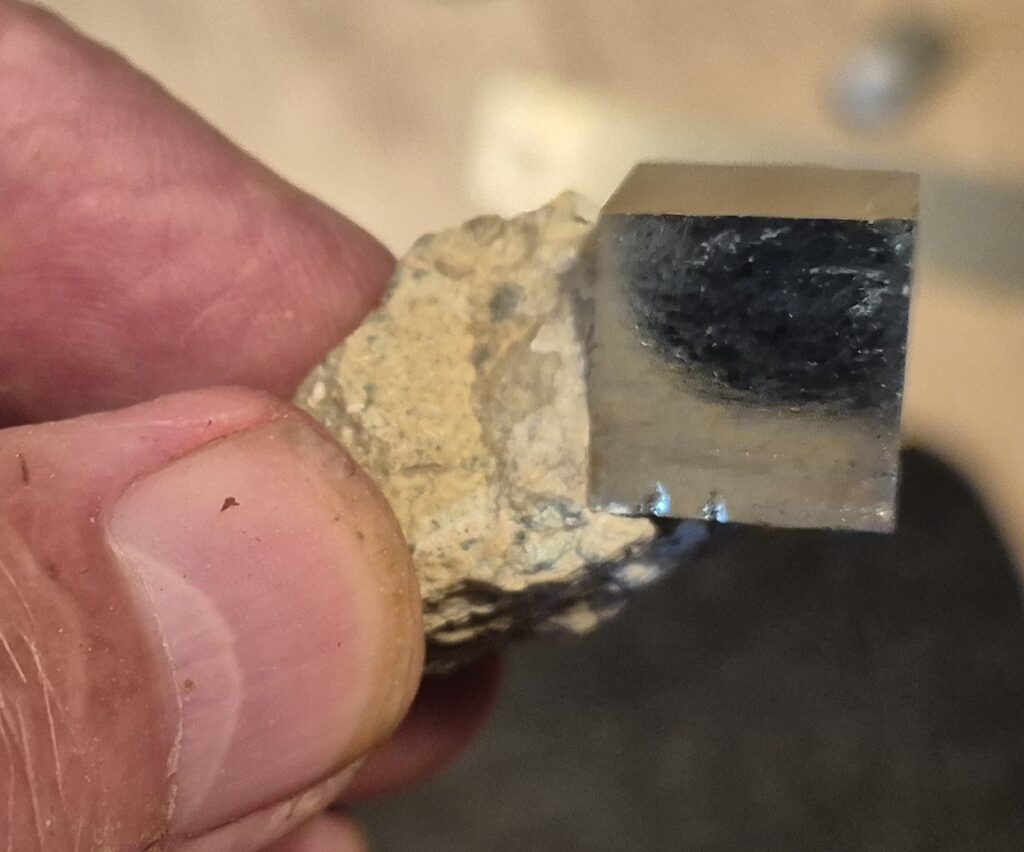
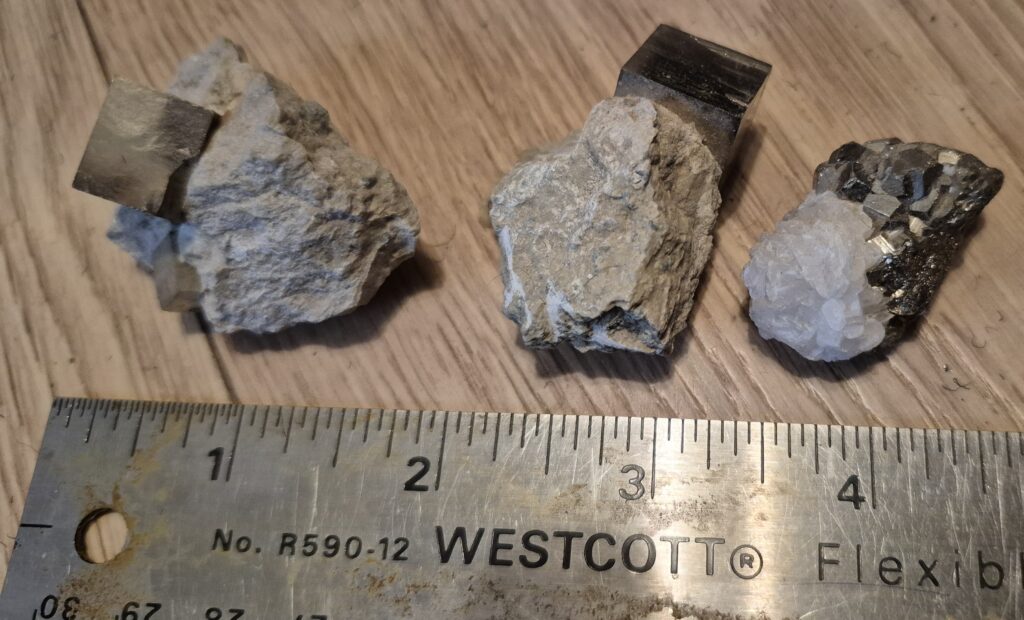
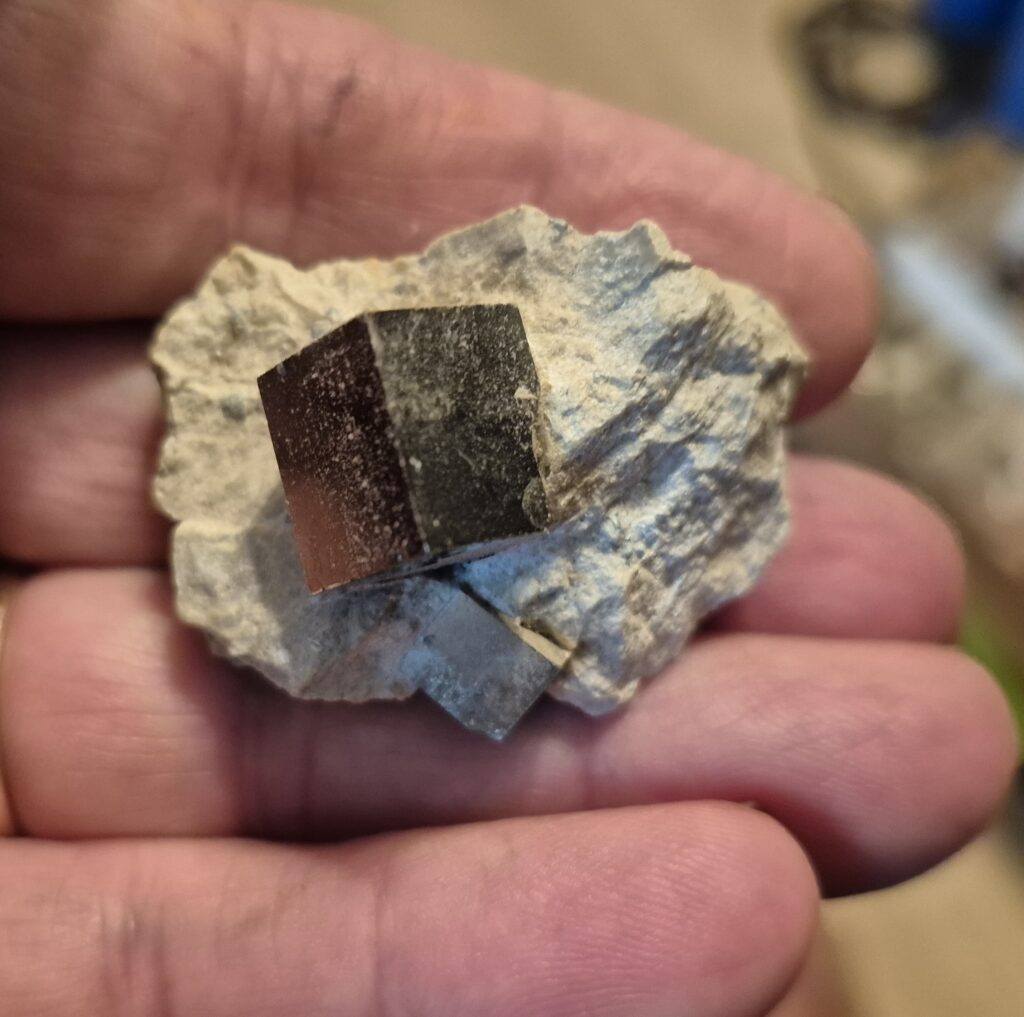
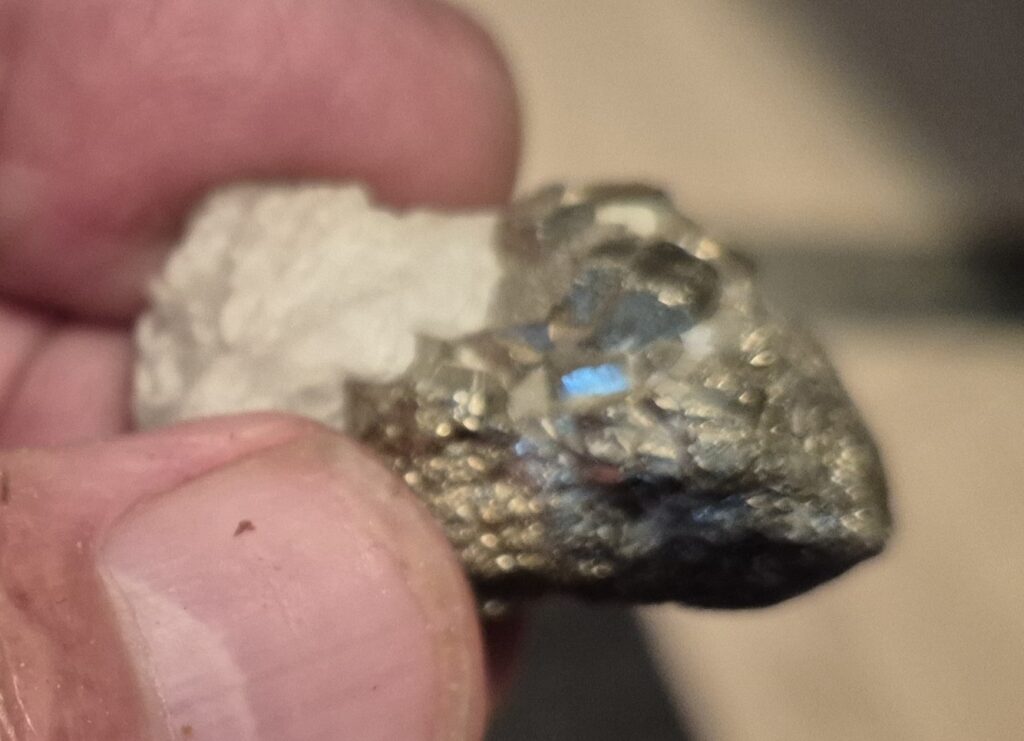
- This weeks speciaL: Beautiful pyrite specimens found on matrix from Valdeperillo, Spain. Makes a great display specimens or gift, showcasing the unique beauty of pyrite crystals in a matrix setting. It is a rare and unique find for collectors, making it a valuable addition to any crystal and mineral specimen collection. SOLD AS A THREE PIESE SET FOR JUST $45.

Pyrite cube


0 Comments